Follow VSB '09 alum Paul Parisi

Follow VSB '09 alum Paul Parisi as he starts his international financial career in Asia

Monday, March 28, 2011

Sevens Fever


Once a year, Hong Kong puts its best face forward and hosts the Rugby Sevens, a world-class sporting event the likes of which you’ll find in only a handful of cities scattered across the globe. A three-day, one-sport Olympics, the tournament sees twenty-four countries vying for the championship cup, plate, bowl and shield over one incredible weekend. The city goes crazy for the event, with an influx of over 21,000 overseas visitors merging with Hong Kong’s already-massive permanent population. Although the sport itself is the reason behind the weekend, the atmosphere, costumes and post-rugby revelry are just as memorable for most of the crowd.

This past weekend saw the 2011 installment of the Hong Kong Sevens, and the event was simply—for lack of a better world—awesome. Last year, in a cruel twist of fate, I wound up in the UK on Sevens Weekend. Although I had a phenomenal experience working out of our London office for those three weeks in March 2010, I was extremely disappointed to miss what I had long been told was the ne plus ultra of Hong Kong weekends. And by only a day or so, to boot! But time flies, and before long, the first strains of Sevens Fever started hitting Hong Kong again in anticipation.

Cathay Pacific, one of the event's two major sponsors,
put together this clever commerical for this year's Sevens

The rugby itself takes place over the course of a weekend, from Friday afternoon through Sunday evening, including the centerpiece showcase all day Saturday. But the first traces of the virus become apparent months before, and amplify with the flood of arriving visitors in the week leading up to the big event. Hong Kong is a noticeably charged city as the Sevens approaches. From the commercials on television and posters around town to the articles in the newspapers and posts online, it is obvious that something special is in the works.

Tickets to the Sevens go on sale in late January, and they sell out in mere minutes. Over the next two months, Hongkongers and overseas visitors alike are on the hunt! The face value of a three day pass is HK$1250, but last Thursday I heard of people selling their Saturday-only tickets for upwards of HK$3500! The whole week was on the slow side business-wise, and the only reason for this was Sevens Fever. Everybody was preoccupied with costume planning and scrambling for tickets.

You see, the most popular place in the stadium is the infamous South Stands, and this area is renowned for the colorful and creative group costumes its inhabitants spend weeks or even months putting together. My coworker Kevin went with his soccer team as Egyptian pharaohs, and other popular costumes included numerous Colonel Gaddafis, Black Swan ballerinas, Michael Jacksons, toy soldiers and sombrero-donning Mexicans, in honor of Mexico’s first-time participation in the tournament.

Gaddafi costumes outside the stadium

As visitors arrive during the week, the restaurants and bars are full of patrons, with crowds spilling out onto the sidewalks and streets. Each day seemed more crowded than the one before, but it was on Friday that things escalated to the next level.

Work on Friday afternoon literally came to a stand-still following the traditional “long lunch” and 4:30pm kickoff of the first match. Instead of selling bonds that day, I was on the hunt for a Saturday ticket, along with the rest of Hong Kong. Even Kevin, who had a ticket set up for himself, was looking for tickets to help out friends and friends of friends. I lucked out and found a ticket on one of the expat websites, and got to leave work early, since the market was completely quiet. And from then on, the weekend was a non-stop onslaught of sports, parties and an electric atmosphere. As dead as the markets had been those past few days, the city was roaring.

Saturday morning I made my way to the stadium bright and early, only to find out the South Stand was already full. Initially I was crushed at the prospect of a three-hour long wait, but my friend Rudi, a huge rugby fan, explained that we would probably be better off forgetting about the South Stand and opting for seats in the upper levels of the West Stand. You see, the South Stand fills up quickly, and after it reaches capacity, they institute a “one in, one out” entry policy.

Madness in the South Stand

But the North, East and West Stands are less popular and there is usually space. So up we went, and I quickly forgot my disappointment watching some world class rugby. The day flew by, and before I knew it, it was 5:30pm, and the South Stand gates had been opened for everybody to enter. I got to watch the last two games amidst the costumes and vigorous insanity, which was unforgettable.

The start of a match

That night, the rugby fans descended upon Lan Kwai Fong, Hong Kong’s most popular nightlife area, for one of the most memorable nights on the town ever. At times it seemed like the entire 40,000-stadium-capacity spectators had all decided to go to this one street! With the possible exception of Halloween, I have never seen LKF so crowded. But the atmosphere was one-of-a-kind, and I will never forget it.

Unbelievable crowds gathered in LKF on Saturday night!

Sunday was another day of rugby at the stadium (which, by the way, was especially constructed for the Sevens in 1994 and is hardly used for anything else over the course of the year). I got to watch the finals from the South Stand again, followed by fireworks and the award presentation ceremonies. The entire place was bathed in blindingly white lights, and by this point, not only was the South Stand packed but every section and seat appeared to be filled to the brim.


Since most visitors have early morning flights back to their respective homes, Sunday night is another packed, party-filled evening. The streets of LKF were bustling until the early hours, and I found myself incredulously eyeing my watch at 3am, grudgingly forced to hop in a taxi and head home, bringing to a close what had easily become the best weekend I’ve had in Hong Kong since the New Year. 

Even on Sunday night, LKF was packed with costumed rugby fans
savoring their last moments of the weekend before heading home!

Hong Kong loves its Rugby Sevens, and now I finally understand why. And I cannot wait for the 2012 version of Sevens Fever to take over this place again. Only next time, count on seeing me as part of a group, in costume and up bright and early in the South Stand on Saturday morning!

Tuesday, March 1, 2011

At the Movies


Going to the movies is one of my favorite leisure activities, as anybody who knows me well knows all too well. Although I usually try to keep this blog focused on either business or culture, I also like to include little snippets of city life in Hong Kong. And since going to the movies plays a significant role in my life here, I figured this could be an appropriate time to write about Hong Kong’s film scene. After all, the Oscars were just handed out a few nights ago, and I’ve been going to the movies more than ever these past weeks, trying to see as many of the contenders as possible. And to boot, the 35th annual Hong Kong International Film Festival takes place later this month, so there's something to look forward to, movie-wise!

At first, Hong Kong can be a frustrating place for the newly-arrived movielover, but it's not without its charms. Unfortunately, unlike New York, London, Paris and other major metropolises, it takes time for the year's most acclaimed films to find their way to Hong Kong's screens. For example, The Fighter will not be playing here until later this month. The King’s Speech only opens tomorrow, and Black Swan and True Grit just came out last Thursday. Smaller independent films might not get theatrical releases here at all, so you have to resort to buying DVDs or going online to find them.

Sillier, less critically-acclaimed films, on the other hand, often open in Hong Kong in concert with their US release, and sometimes even before! Love and Other Drugs, No Strings Attached, Sanctum 3D and countless other mindless chick-flicks and action films are often all that can be found during the dry spells. It can be very annoying when people back home tell you that a great movie has just come out, knowing it will be months before you get a chance to see it.

One of the first differences that struck this American filmgoer upon arriving at his first Hong Kong cinema (to see Avatar) was having to choose a seat when buying a ticket. Here, you take a real chance if you just show up at the box office twenty minutes prior to show time, because screenings often sell out hours or even days in advance, especially when a popular film has just opened. Other times, the last remaining seats will be in the very front row—and I’ve gotten stuck there too often! I suppose I’ve adapted to this difference by now, but I still think “first come, first served” seating at the movies is a better way to go.

AMC Pacific Place, where I saw Avatar soon after arriving in Hong Kong

For all my complaints, though, I must say the theaters themselves are incredible. In general, the seats are much more comfortable here than in any other city where I’ve been a moviegoer. And there is a very classic feel to most of the cinemas, from the gold curtains that open as the film is starting to the ushers who escort you to your seat.

I work in a skyscraper in Central called IFC2—a stroke of luck because there is a movie theater in the IFC Mall downstairs! I can easily go down after work to see a film at the IFC Palace, and I can find time to visit the box office earlier in the day to ensure I get decent seats. If a showtime is just right, I can even squeeze one in during my two-hour lunch break, but the timing has to be perfect. Though it’s not my favorite Hong Kong movie theater, it’s certainly the most convenient, and therefore probably the one where I’ve spent the most time.

IFC Palace, in the shopping mall connected to my office building

Just across the harbor in TST is the Grand Ocean, a rare remaining relic from a grander, more glamorous era of movie-going. Built in the 1960s, the huge theater only has one screen and over a thousand seats! Due to its single screen, the theater usually only shows one film at a time, for a week or so, before changing its program. Thus, you have little choice in what you see but are treated to a very retro experience. The only movie I’ve seen here so far has been The Tourist, and although that much-maligned film was pretty silly and far from believable, it still made for an overall great night seeing it in such a stunning venue.

Grand Ocean Cinema

Further up the Kowloon peninsula, in Yau Ma Tei, is one of Hong Kong’s true cinema gems, the Broadway Cinémathèque. To boot, it has a wonderful little café attached to it, called Kubrick, that is ideal for a nice coffee or snack before or after the movie. This theater has a constant stream of interesting films on its roster, running the gamut from foreign art films and American indies to standard shoot ‘em ups and fun rom-coms. It has special previews of major films before they open at other theaters around town and well-planned festivals and retrospectives of great classic and modern films. Surprisingly, this year, it is the only cinema in town to schedule any screenings of Uncle Boonmee Who Can Recall His Past Lives, the bizarrely-titled Thai film that won the Palm d'or at Cannes.

Yau Ma Tei's Broadway Cinematheque

In the Elements shopping mall in West Kowloon is the Grand Cinema (not to be confused with the Grand Ocean), which is where I went last night to see True Grit. It is a great theater that often keeps movies for an extended period of time. For example, in case you missed it, they are still showing The Social Network. It’s also where I managed to catch a preview of The King’s Speech about a week ago, allowing me to see it before the Academy Awards even though it still hasn't officially opened here. The Grand Cinema also puts together some good festivals, including one that starts this week and includes such films as The Hurt Locker, The Tree and, inexplicably for series called “Art Scene Revisited”, Step Up-3D. I’m not sure how that one slipped in there!

The Grand Cinema, Elements, West Kowloon

Tuesday night is officially “discount movie ticket night” in this town. All the regular theaters—yes, literally all of them—slash their prices significantly for the Tuesday screenings. So for maybe HK$50 (about $6) you can see the film of your choice instead of the usual HK$75 or HK$80. The actual discount depends on the specific theater, but regardless, it is a good excuse to go to the movies. Monday has its 2-for-1 dinner deal, and Wednesday has its horse races in Happy Valley, so Tuesday fits perfectly in between as a night to catch a good film. Since I’ve come back from my Christmas trip home, I’ve pretty much taken advantage of this deal every week.

There are some other theaters that are pretty special here in Hong Kong. Perhaps the coolest is the Director’s Club in Taikoo Shing. Two intimate twelve-seat screening rooms (named the Hitchcock and Chaplin Theatres) show current, popular films in a truly luxurious setting. The fully reclining leather chairs are just like first class airplane seats. Since the theater is air conditioned, warm blankets are provided. And the ticket price of HK$175 (about $22), while much more expensive than standard movie tickets, includes a hot dog to start and unlimited popcorn and soda throughout the film. Only instead of having to get up and leave the theater to get refills, you simply press a button on your chair and an usher appears and takes your order! So far, I've only made it here once, in August to see Toy Story 3, but I can't wait to go back.

Hong Kong's most luxurious cinema, the Director's Club

The Agnès B. Cinéma, near my apartment in Wan Chai, has some interesting films from time to time, though recently the programming has been more sporadic than it used to be. Thanks to this theater, I was finally able to see some films I'd been hearing about for years: Bullitt, The Seventh Seal and Vivre sa Vie. I also got the rare chance to see the monumental Japanese trilogy The Human Condition, which clocks in at almost ten hours. The three-part epic was presented over the course of a weekend, and it was incredible. And what makes Agnès B. particularly refreshing for me is its open seating policy—no pre-selected seats here, sit anywhere you like!!

From time to time, there are also special cinematic events around town. On a rainy Thursday night last July, for example, one of the city's major concert halls held a screening of Charlie Chaplin's silent classic City Lights, accompanied by live orchestra! It was one of the more intersting events on Hong Kong's culture calendar, and I am so glad I got to see it.

A venue focusing specifically on classic films is the Hong Kong Film Archive, which I love. Located in Sai Wan Ho, this isn’t just a movie theater, it’s a center for film preservation, exhibition and study. Once a month they screen what they call a Restored Treasure, which is generally an older film highly regarded in the world of cinema. Past treasures have included Lawrence of Arabia and the Japanese drama Twenty-Four Eyes.

The Hong Kong Film Archive

The HKFA also organizes major film series on a regular basis. For me, the highlight of the last year was their comprehensive Alfred Hitchcock festival, which lasted almost two months! In all, I made it to six screenings throughout October and November. Luckily, since Sai Wan Ho is pretty far from the action, the Archive rented out screening spaces in more centrally-located parts of town for almost half of the films, so I got to take some friends to see Psycho for their first time without having to drag them all the way to Sai Wan Ho!

And of course, the imminent 35th annual Hong Kong International Film Festival (HKIFF) is a major cinematic event of increasing worldwide importance. Although it is a tier below the festivals in Cannes, Venice, Berlin and Toronto, it will surely be a pleasure to attend screenings in the presence of directors and other creative forces behind the production of many new and exciting films.

Now that I’ve gotten used to the differences between seeing a movie here and in the States, I can say I’ve grown to love Hong Kong’s cinema culture. Although I truly wish the films here were released earlier than they tend to be, I think the city makes up for this shortcoming with its classy theaters, wonderful festivals and relatively inexpensive ticket prices. After the conclusion of the HKIFF, I'm sure I will love it all the more! All in all, this is a great place to see a movie!

Thursday, February 10, 2011

Spring Break 2011!!!


Well, all my fears were for nothing. That typhoon I mentioned steered clear of Cebu. Yes, my first day or so was a little on the cloudy side, but it was always warm, and by Friday, bright sunshine filled the air from dawn till dusk.

Loboc Cathedral, the second oldest church in Bohol

It was a fantastic vacation, evenly split between adventurous exploration of a new place and leisurely relaxation by the pool and beach. You see, the first two-and-a-half days of my five day trip were spent backpacking through the rugged island of Bohol, while the second half was spent on the grounds of the lushly landscaped Shangri-La Resort on Mactan Island. It was literally two vacations in one, and every moment was incredible.


I flew from Hong Kong to Cebu, with a connection in Manila. What I didn’t realize when I booked my $9.13 flight (on Zest Air, Asia's Freshest Airline) between MNL and CEB was that I would have to take a twenty minute taxi ride between the International Arrivals Hall and the far humbler Domestic Departure Terminal in midday Manila traffic. Luckily, everything worked out, but I was a little scared for a minute there.

When I found such a cheap airfare, I thought I might be risking my life on an old, worn plane, but it was surprisingly modern and large. The only cause for alarm came when they announced over the loudspeaker that passengers had to remain in their assigned seats—even though the flight was more than half empty—because switching might throw off the balance of the plane!!!

The no-frills Domestic Terminal of Manila Airport—at least it had a Cinnabon!

The name Cebu refers to several things: it is a province in the Visayas region of the Philippines, the name of a specific island and also the name of that island's major city. The airport is on Mactan Island, connected by bridge to Cebu City, where I spent the night.

That first night was a great change of pace from hectic Hong Kong. I checked into my quirky hostel, met the owner who gave me some tips on what to do, and then went for a filling and delicious al fresco Thai dinner for about $10. I even saw some of the Chinese New Year fireworks display! Early the next morning, after some tasty banana pancakes, I caught a boat to Bohol, an island about two hours from Cebu City by ferry. I stood outside for the majority of the ride, watching as we glided past endless Visayan islands, fisherman and boats.

One of the islands we passed on the boat ride to Bohol

The ferry docks in Tagbilaran City, and from there I had to take a tricyle to the bus terminal, catch a bus to Loboc, and then take a boat ride fifteen minutes upriver to a cool, bohemian hideaway called Nuts Huts. Originally my trip to Bohol was only going to be for the day, but as soon as I read about Nuts Huts in my Lonely Planet guide, I immediately had my heart set on spending at least one night there.

All the buses remind citizens to "pray the holy rosary daily" in Bohol.

By the way, I loved Bohol's buses, with their loud music, ever-present Virgin Mary and Jesus, and friendly fellow passengers. That's one thing about Southeast Asia—each country's unique modes of transport are so distinct and full of character that they turn what would ordinarily be a memorable experience into something unforgettable. I can't imagine Bangkok without its tuk tuks, or Hong Kong without its tram, or Manila without its jeepneys. And now I can't imagine Bohol without its yellow, old-fashioned buses. It sounds funny to say this, but those bus rides are some of my favorite memories of this trip.

Inside a Bohol bus

The town of Loboc

Driving past humble houses, rice paddies and cow pastures, the rural island was quite a juxtaposition with comparatively-frantic Cebu City, where I’d just come from. Making the ride even cooler was the soundtrack of current American pop music accentuating the surreal vibes. I got off the bus in Loboc, walked to a humble pier to find a boat, and when I finally got to Nuts Huts, I had arrived in a whole other world.

On the boat ride to Nuts Huts

Run by a Belgian couple who decided to leave their Western way of life behind them and set up a jungle paradise in the Philippines, the ‘resort’ is a stunning place. Nine movie-themed cabins perched on stilts overlook lush gardens and the Loboc River, and an arduous 200-step staircase links the cabins with the all-purpose office/dining room/recreation area and—further up—a long dirt path to the main road.

My hut for the night – note the goats eating the grass!

Nuts Huts is not necessarily an easy place to stay, but it was infinitely rewarding. The owners treat all guests like old friends and are a fountain of information. Whether meeting interesting international backpackers, watching the goats munch on my cabin’s front lawn, taking an early morning swim in the river (past a waterfall!) or simply lounging on the deck overlooking the water and greenery, the experience was one I will surely never forget.

The treacherous staircase at Nuts Huts

Bohol’s two signature attractions, the Chocolate Hills and the Tarsier Sanctuary, are both easily accessible from Nuts Huts, which is one of the major reasons why I chose to stay there. Sure—you could definitely do them both in one day and be back in Cebu City by nightfall, but why would you want to?

The huts and grounds of the 'resort'

Although there is surely a great deal more to see on the island, due to my limited time, I was only able to check these two items off of my Asia To Do List. But I plan to return in the future, as I was completely won over by the way of life in this fascinating corner of the world.

The dirt path connecting Nuts Huts to the main road

In the afternoon, one of my Belgian hosts suggested the most convenient schedule: catch a Carmen-bound bus to the Chocolate Hills that day and hit up the Tarsier Sanctuary on my way back to Tagbilaran the next morning. As you can imagine, I was delighted to take another hour-long bus ride!

Breathtaking: the Chocolate Hills

I had never seen anything quite like the Chocolate Hills. Although I had googled them when I first decided to take this trip, no photograph I’ve yet seen can truly do justice to this surreally beautiful landscape. It reminded me of a kindergartner's fanciful drawing of some far away planet. During rainy season, the hills are leafy and green, but during dry season they turn the chocolate brown color their name suggests.

On a clear day you can see forever!

The deliciously-named hills number almost 2,000 and stretch in all directions as far as the eye can see. Local legend attributes the quirky mounds to the debris field left over following an ancient battle between two giants, who fought so long that they eventually became friends, and so enjoyed their newfound friendship that they never bothered cleaning up their mess! A second, more romantic tale tells of a giant who so loved a mortal woman that when she died, he cried for weeks; as his tears fell to earth and dried, they became the hills.

The "Three Sisters" Hill

Of course, some boring scientists have their own less interesting theories as to how the hills were formed, but regardless of their origins, the sight of the never-ending mini-mountains was easily the most breathtaking natural wonder I’ve yet seen in Asia. To augment the experience, many people pay a man with a motorbike (called a habel habel) to drive around some of the hills, so, of course, that is exactly what I did.

Yet another view of the Chocolate Hills

My driver took me to the ‘Three Sisters’ and then over to another hill, which we proceeded to scale. The view from the top was unreal, but my driver probably thought I was crazy for the insane amount of pictures I was taking. Eventually I realized they were not capturing the otherworldly aura, so I just put the camera away and enjoyed the ride.

Typical Bohol: muddy road complete with water buffalo and motorbike

Back at Nuts Huts, I had dinner with a French couple I had met earlier. The next morning, I also ate breakfast with them before taking a dip in the river. I swam across it first, and then walked about 500 meters upstream to a waterfall, where I was told I should jump in and lazily float back down to the Nuts Huts dock. It was an awesome start to an awesome day.

View from my breakfast table at Nuts Huts

After checking out, I caught a bus to the Tarsier Sanctuary, which was another highlight of this trip. Tarsiers were once thought to be the world’s smallest monkey. Although they have lost that distinction to a newly-discovered Indonesian primate, they are still surely one of the coolest.

Bohol's most famous resident—the tarsier!


Hey, little fella!

Tarsiers are only about five inches long, and they have huge eyes. In fact, the size of their eyes in relation to their head is over 150 times greater than that ratio in human beings! I thought the monkeys looked like aliens from some 1980s sci-fi film, and it was great to get to see them so close.


Although many tourist attractions on the island keep one or two mistreated tarsiers in cages, the Tarsier Sanctuary in Corella is definitely the best place to see the animals in their natural environment. It is a center for research and does much work to protect the creatures and their habitat, so I was more than happy to make the extra effort to visit.

View of Tagbilaran City, near the ferry pier

That afternoon I caught the boat back to Cebu City. Before we left, a 'video prayer' played asking God to guide the captain during the trip and get us all safely to our destination. This underscores the intense spirituality of the Filipinos and the devotion to Catholicism in the Philippines, easily the most Christian country in Asia. It was a very refreshing and welcome start to another pleasant crossing. Also played (two times!) before our departure was a music video of a Tagalog-language song about the beauty of the Philippines. The song is a collaboration of some of the most well-known and talented Filipino musicians, and I was so happy when I found it online when I got back to Hong Kong. .


Back in Cebu City, the adventure ended and the relaxation started. That night I was supposed to meet my friends Stephanie and Long at the pool bar at the resort, but due to a combination of having to catch a later boat and not having a working cell phone, I didn’t find them! Still, I walked around the beautiful grounds, read by the pool, and listened to a Filipino band play some catchy local tunes.

The grounds of the Shangri-La Resort

The pool

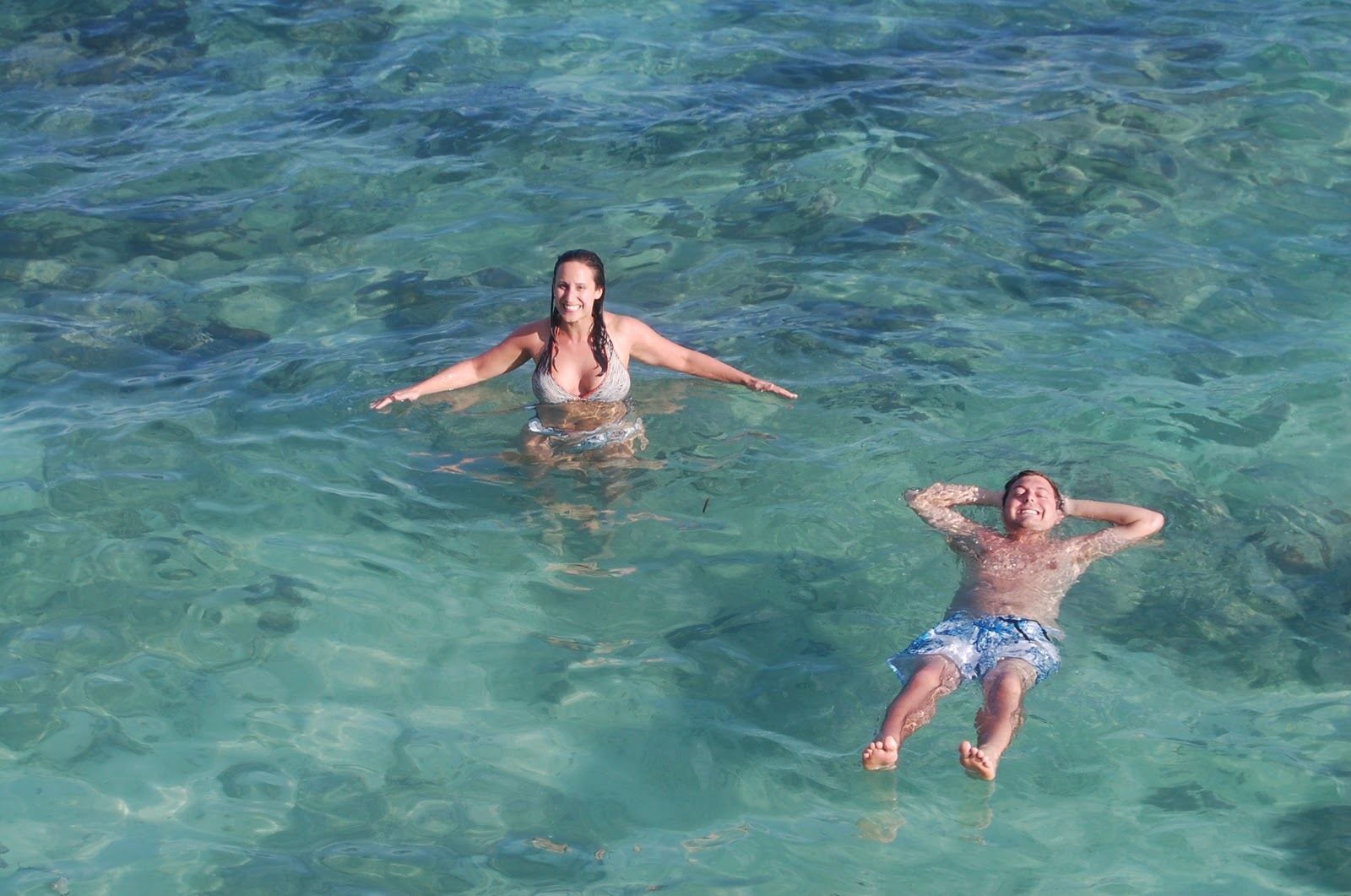
The next morning, I was just about to kickstart the day's reading when I heard Stephanie’s unmistakable voice behind me. For the rest of the day, Stephanie, Long and I sat by the pool, overlooking a beach, alternating between naps, piña coladas, sunbathing and swimming. The day was pure heaven.

Reading in the sunshine

We had a light, early dinner overlooking the sea, as day turned to night and the stars came out. Dinner and drinks with great people in a beautiful setting—can the last night of a vacation be any better than that?

View from our table at dinner

With Long and Stephanie

Later that night, I hopped in a cab and asked the driver to take me to Tops, an observation deck high above the city. The ride was long—nearly an hour—but the view was unmatched. It was so serene up there, gazing down at the infinite lights below.

Loving the view from Tops

Cebu City is a very low metropolis with few iconic structures, so the view from Tops was quite different than most observation levels. Instead of looking for the famous buildings and parts of town, you kind of just gaze out over the twinkling lights of Cebu City, Lapu-Lapu City and Mandaue City, and enjoy breathing in the fresh mountain air.

The lights of Cebu

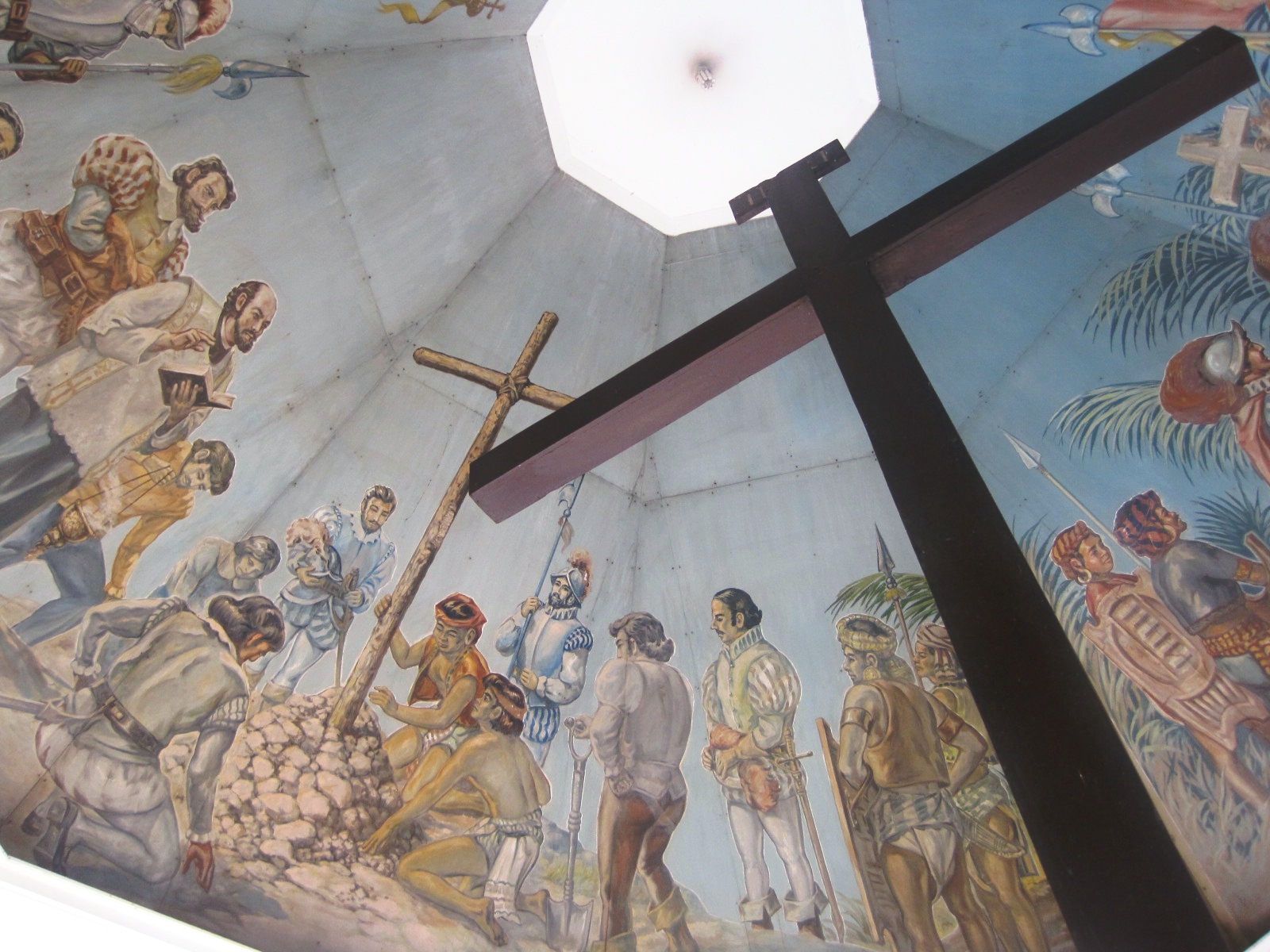
The next morning I crammed in two tourist attractions I really wanted to see: Magellan’s Cross and Fort San Pedro. The Cross is said to be on the very spot where Ferdinand Magellan first planted a humble wooden cross upon arriving in Cebu in 1521. It's probably Cebu's most famous attraction, so there was no way I was missing it.

Plaque commemorating Magellan's Cross

Murals on the ceiling depict the historical events of Magellan's arrival. I thought it was hilarious that it looks like all Magellan does is stand around and watch while the Filipinos do all the hard work.

Magellan's Cross and ceiling murals

Near the cross is an old church called the Basilica of Santo Niño, just one of many beautiful churches in the Philippines. Although these churches are certainly not as grandiose as the great cathedrals of Europe, they have a graceful, quiet charm all their own, and I find them just beautiful.

Statues outside the Basilica of Santo Niño

Next up was Fort San Pedro, an old Spanish fort that is now overgrown with trees and flowers. It was a beautiful and photogenic spot. When I went to Manila, I visited Fort Santiago in the walled city called Intramuros. That fort was very well restored, but Fort San Pedro is more of a historical ruin, and as such, it was a fascinating place to walk around and explore.

The façade of Fort San Pedro

Courtyard inside the fort

Old walls of the fort, covered in moss.

But even though I liked both sights, I just really enjoyed the atmosphere of walking around Cebu City. I felt like I was in a movie, with action going on all around me. Children playing, hawkers selling fruit, women shopping at street markets. The city might not be the cleanest or most beautiful in Asia, but it certainly has character, and I loved it for that.


Fruit stand in town

Cebu City!

After a few more hours reading and swimming in the pool at the Shangri-La, it was time to head to the airport. The three of us hopped in a taxi as our vacation came to an end, but I will never forget the five days of this Chinese New Year.


I never thought it would come close to last year’s trip to Thailand, but I’m happy to report that it gave it a good run for its money! The bar has been set very high for next year, so I better start thinking of my plans sometime soon!

Super-Philippines...a cow just chilling on the side of a busy road.

I’ve written before that Thailand is one of the most spectacular countries I’ve ever visited, and now I’m tempted to put the Philippines on a similar pedestal. I loved my weekend trip to Manila last January, but nothing could have prepared me for the splendor of the Visayas. If Thailand’s x factor is its cuisine, then the Philippines’ is definitely its people. When they saw I was confused on the bus, they went out of their way to explain how things worked, and whenever we drove past little kids, they always waved and said, "Hello!!" or "What is your name?" or "How are you?" They have got to be among the friendliest people in the world.

Little Filipino boy waving at me when I was on the bus to the Tarsier Sanctuary

Although the Philippines is full of stunning natural wonders, pristine beaches, and unique historic sights, it's ultimately the Filipinos themselves who truly make their country the very special place that it is. I look forward to many more hours exploring the wonders of this charming, extraordinary destination!